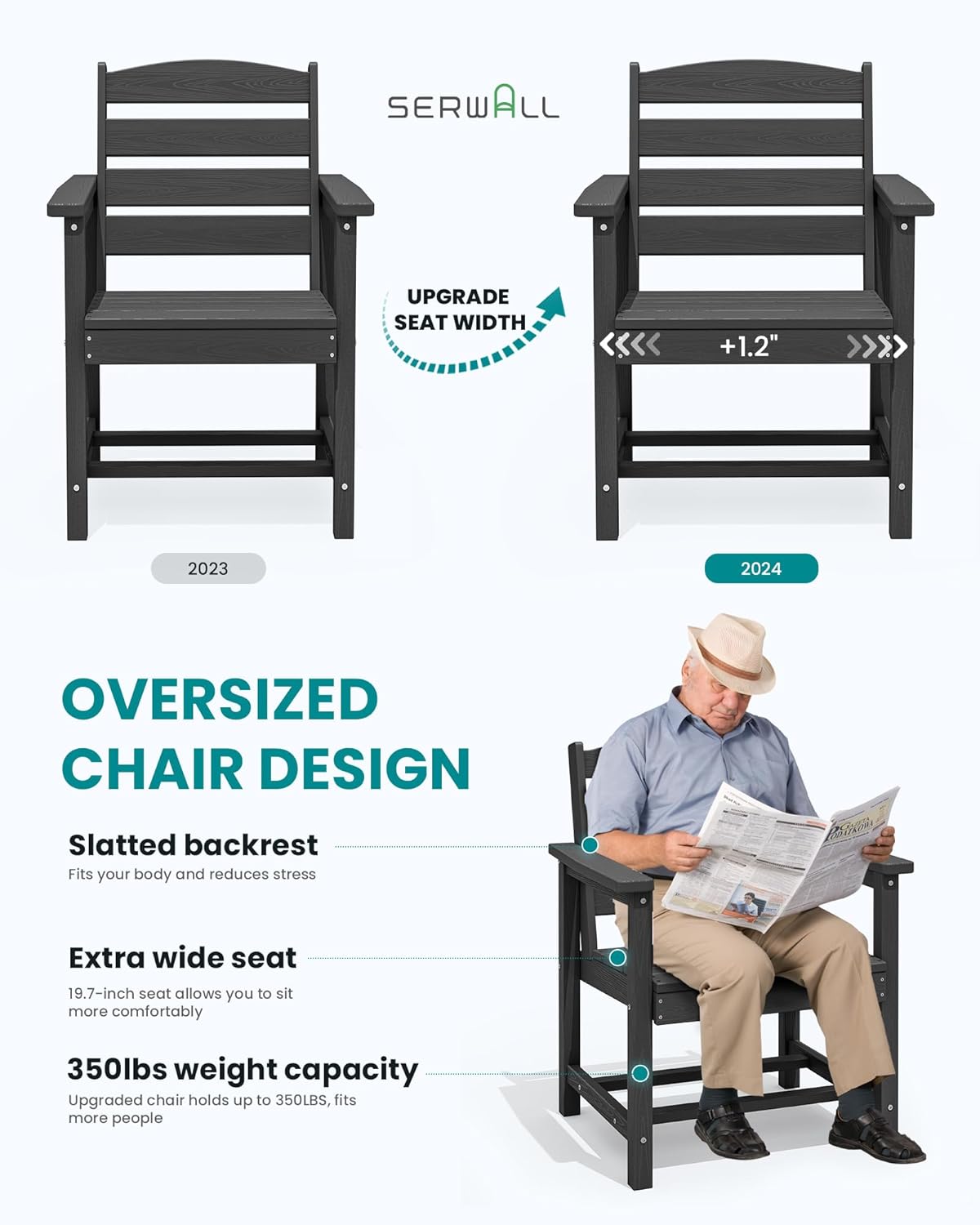
If you’ve ever watched a teak dining set slowly gray, crack, and beg for oil it probably won’t get, or seen a cheap tubular-steel table rust through its welds in two seasons, you already know why people eventually go looking for a better option. HDPE (high-density polyethylene, the same dense plastic used in cutting boards and milk jugs, but engineered into furniture-grade lumber) and powder-coated aluminum (aluminum frame with a baked-on paint finish, as opposed to a painted or anodized surface) are the two materials most often described as genuinely low-maintenance outdoor furniture. Not “wipe it down twice a year and hope for the best” low-maintenance — actually low-maintenance. No oiling. No sanding. No rust. This guide is aimed at buyers who’ve done one lap of the patio furniture market, know the basic material categories, and are now trying to decide whether either of these options earns its price tag, and where the real tradeoffs live.
| EDITOR'S PICK[YEFU HIPS Patio Table Set: 7 Pi…](https://www.amazon.com/dp/B0DQB8Z4BR?tag=greenflower20-20) | Mid-tierYEFU HIPS Patio Table Set: 7 Pi… | Budget pick[SERWALL 7-Piece Patio Dining Ta…](https://www.amazon.com/dp/B0CN9BHJLV?tag=greenflower20-20) | |
|---|---|---|---|
| Material | HIPS | HIPS | HDPE |
| Frame Material | Metal Aluminum | Metal Aluminum | — |
| Color/Finish | Teak | Gray | Black |
| Brand | YEFU | YEFU | SERWALL |
| Price | $799.99 | $749.99 | $599.99 |
| See on Amazon → | See on Amazon → | See on Amazon → |
What HDPE Actually Is (and Why It Isn’t Just Plastic Lawn Furniture)
The word “plastic” does a lot of damage to HDPE’s reputation. When most people picture plastic outdoor furniture, they’re thinking of injection-molded resin chairs — thin walls, lightweight, chalky after two summers. HDPE lumber is a different category. It’s made by compressing recycled or virgin high-density polyethylene into solid boards and profiles that mimic the look and feel of painted or stained wood. The density is real: quality HDPE furniture pieces are noticeably heavy, and that weight is intentional — it signals wall thickness, which is directly tied to UV resistance and structural integrity.
Gardenista’s overview of HDPE outdoor furniture notes that the material holds color through the full thickness of the board, which means scratches and dings don’t expose a white core the way painted wood does. The color is the material. That’s a meaningful difference from powder-coated steel, where a chip in the finish is the beginning of a rust problem.
What to check on HDPE spec sheets:
- Recycled content percentage. Many manufacturers list 90–95% post-consumer recycled content. Higher isn’t always better quality, but it signals commitment to a consistent manufacturing spec.
- Board thickness. Look for a minimum of 1.5 inches on table tops and seat slats. Thinner boards flex and can warp in high heat.
- UV inhibitor rating. Reputable brands specify UV stabilizer content; budget pieces often omit this entirely.
- Fastener material. Stainless steel or marine-grade hardware is the right call. Zinc-plated hardware on HDPE furniture is a common cost-cut that causes streaking and fastener failure within a few years in humid climates.
Consumer Reports’ outdoor furniture buying guide specifically calls out fastener quality as an underexamined failure point in otherwise solid HDPE sets — worth checking before you commit.
Powder-Coated Aluminum: Where the Tradeoffs Actually Live
Aluminum is genuinely rust-proof in a way that steel is not. The base metal doesn’t oxidize the same way; left bare, it forms a dull oxide layer but won’t develop the structural rust that turns steel furniture into a crumbling liability. That’s why aluminum is the dominant metal choice in coastal and high-humidity markets. The finish on top of the aluminum — the powder coat — is the variable that determines how long the set actually looks good.
Powder coating is a dry finishing process: electrostatically charged powder is applied to the frame, then baked in an oven to fuse into a hard shell. The number of stages in that process matters more than most marketing copy admits.
The powder-coat stages explained:
- Single-stage (one coat, no primer): Common on sets under $400. Adequate for mild climates and covered patios. Chips more easily; touch-up is harder.
- Two-stage (primer + topcoat): The baseline for sets in the $600–$1,200 range. Significantly better chip and UV resistance. This is where most mid-market brands land.
- Three-stage (primer + color coat + clear topcoat): Found on premium sets from brands targeting coastal or desert buyers. Architectural Digest’s material comparison notes this finish level is roughly equivalent to automotive-grade protection and is appropriate for year-round outdoor exposure in harsh climates.
The Wirecutter / New York Times review of outdoor dining sets flags a practical issue with aluminum that’s worth naming: lightweight aluminum frames — the ones under 10 lbs per chair — can shift in wind, making them feel less planted than heavier materials. If your patio is exposed or elevated, either weight the frames (some manufacturers sell sandbag kits for chair legs) or look for sets spec’d above 12 lbs per chair.
Frame construction quality signals worth checking: welded joints are stronger than bolted connections at the same gauge; look for internal corner gussets on rectangular table frames, which prevent racking over time.
HDPE vs. Aluminum: The Head-to-Head
These two materials often appear in the same set — HDPE tabletop and seat surfaces on aluminum or powder-coated steel frames — but they also compete against each other as full-set solutions. Here’s where each wins.
By the numbers — 5-year cost of ownership comparison (6-person dining set):
| HDPE/Aluminum | Mid-grade Teak | Powder-Coated Steel | |
|---|---|---|---|
| Sticker price (typical) | $800–$1,800 | $1,400–$2,800 | $400–$900 |
| Annual maintenance cost | ~$0–$20 (cleaning) | ~$80–$150 (oil, sand) | ~$40–$100 (rust treatment, touch-up) |
| 5-year ownership cost | $800–$1,900 | $1,800–$3,550 | $600–$1,400 |
The math above is based on published manufacturer recommendations and owner-reported maintenance cost patterns aggregated across long-run reviews on platforms like This Old House and Wirecutter. It is not a scientific study, but the pattern is consistent: HDPE and aluminum sets have the lowest total cost of ownership over five-plus years specifically because maintenance costs approach zero. Teak looks cheaper at year one if you’re comparing against a premium HDPE set; by year five, it rarely is.
When HDPE wins:
- Coastal or high-humidity environments where even powder-coated aluminum can show salt oxidation on exposed hardware
- Families with kids or dogs where surface scratches are inevitable (HDPE’s color-through property means scratches are nearly invisible)
- Buyers who genuinely will not maintain furniture — and are honest with themselves about that
When aluminum wins:
- Buyers who want a cleaner, more architectural look (extruded aluminum profiles offer sharper lines than HDPE lumber aesthetics)
- Screened porch or covered patio applications where UV load is lower and full weather-sealing matters less
- Buyers at the lower end of the budget who still want rust-proof metal — entry-level aluminum sets can be found in the $250–$500 range for 4-person bistro configurations
The honest knock on HDPE: HDPE furniture’s visual aesthetic is still anchored in a “painted Adirondack” idiom — wide boards, casual lines, often associated with a beach-house vibe. If your patio design leans modern or formal, you may struggle to find HDPE sets that fit the aesthetic. The category has expanded, but it hasn’t caught up to aluminum in terms of design range.
The honest knock on powder-coated aluminum: Cushions are almost always required for comfort. Most aluminum dining chairs lack the ergonomic contouring of teak or HDPE slat-back chairs, and owners consistently report that bare aluminum dining seats are uncomfortable for meals longer than 30 minutes. Budget $200–$600 for a quality cushion set (look for Sunbrella or equivalent solution-dyed acrylic fabric, which resists fading and mildew), and add that to your sticker-price math.
Climate-Specific Recommendations
Generic “weather-resistant” claims are nearly useless. Here’s the material decision framed by climate:
Hot, humid (Gulf Coast, Florida, Southeast): HDPE or three-stage powder-coated aluminum. Standard two-stage powder coat on steel frames will show oxidation at fasteners within two to three seasons in these environments. HDPE is genuinely indifferent to humidity. Per Consumer Reports’ outdoor furniture guide, moisture cycling — the daily expansion and contraction caused by humidity swings — is the primary driver of furniture joint failure; HDPE handles this better than any wood alternative.
High UV (Desert Southwest, high altitude): Three-stage powder-coated aluminum with UV-stabilized cushion fabric. HDPE holds color well under UV but can soften slightly on surfaces left in direct Arizona summer sun all day; lighter HDPE colors perform better than dark colors in these conditions, as they absorb less radiant heat. Look for HDPE products with a published UV stabilizer spec.
Freeze-thaw (Upper Midwest, Northeast, Mountain West): Both materials handle freeze-thaw cycles well. This Old House’s outdoor furniture material guide specifically notes that HDPE doesn’t absorb water, which means it won’t crack during freeze-thaw the way wood and some composites can. Aluminum contracts in cold but doesn’t become brittle at patio-relevant temperatures.
Mild and coastal Pacific (California, Pacific Northwest): Either material works well. The deciding factor is aesthetics and budget. The Pacific Northwest’s consistent moisture and mildew pressure makes teak and uncoated steel poor choices; HDPE and aluminum are both appropriate.
The Decision Frame
If you’ve gotten this far and you’re still deciding, here’s the honest if/then:
If you want zero maintenance and live anywhere with real weather — HDPE with stainless steel hardware is the right call. Pay for board thickness and UV stabilizers; don’t let the sticker price of a premium HDPE set surprise you when you run the five-year math against teak.
If design range and a cleaner look matter more than never touching the furniture — three-stage powder-coated aluminum is the better fit. Budget for cushions upfront, not as an afterthought.
If you’re at the entry end of the budget (under $600 for a 4-person set) — two-stage powder-coated aluminum is the honest best-value option. Single-stage is a gamble; teak at this price point is almost always plantation-grade wood with inconsistent drying, which means cracking is likely by year three.
If you’re combining materials — HDPE tops on aluminum frames is the combination reviewers at both Wirecutter and Architectural Digest recommend most often for all-weather outdoor dining sets. The aluminum frame provides the structural precision; the HDPE top provides the impact and moisture resistance that aluminum alone can’t offer.
The category doesn’t require you to choose between attractive and durable. It just requires you to be honest about your climate, your maintenance habits, and your five-year budget — not just your sticker-price budget. Run that math first, and this category almost always wins it.